
- Real Time Telematics Platform on MongoDB
- MongoDB Zero Shot Semantic Serach
- Building an AI-Powered Recommendation System using RAG, MongoDB, Ollama, and Gemini
- AI Database Features
- Understanding Agentic AI: The Shift from Passive Models to Autonomous Agents
- The AI Blockchain
- Model Context Protocol (MCP) vs Agent to Agent (A2A) Protocol
- Responsible AI
- Building a CI/CD Pipeline for Machine Learning Using AWS Services
- DeepSeek Architecture
- Machine Learning for Beginners. Your roadmap to success.
- The Machine Learning Algorithms List: Types and Use Cases
- Harnessing Machine Learning for Advanced A/V Analysis and Detection
- TensorFlow Lite vs PyTorch Mobile for On-Device Machine Learning
- Generative AI presents new opportunities for accelerating human achievement
- Unlocking the true potential of AI with UiPath business automation
- AI for good: Three principles to use AI at work responsibly
- Transforming healthcare document processing with AI
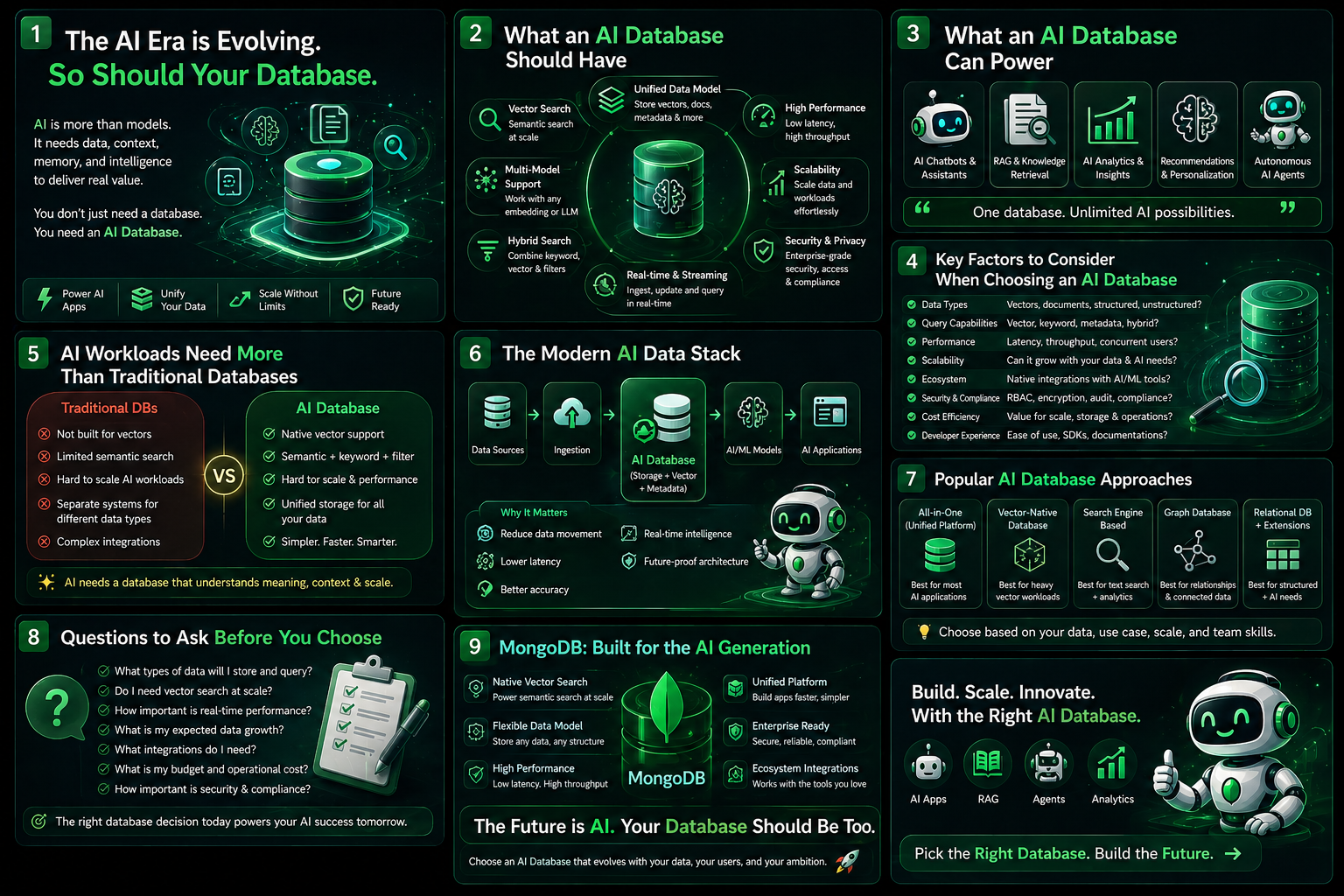
AI Database Features
The AI Era is Evolving !!!! So Should Your Database ?
What is an AI Database?
An AI database is not just a storage system.
It is an intelligent data layer designed to:
- Understand semantic meaning (via embeddings)
- Retrieve relevant context (via vector search)
- Support real-time and large-scale workloads
- Integrate seamlessly with LLMs and agents
In simple terms:
AI Database = Storage + Retrieval + Context + Intelligence
Core Capabilities of an AI Database
| Capability | Why It Matters |
|---|---|
| Vector Search | Enables semantic understanding instead of keyword matching |
| Hybrid Querying | Combines vector + metadata + keyword filters |
| Multi-Modal Data Support | Handles text, images, audio, structured data |
| Real-time Processing | Required for chatbots, agents, live systems |
| Scalability | AI workloads grow rapidly |
| Security & Governance | Critical for enterprise AI |
Understanding Data Types in AI Systems
Traditional databases focus mostly on structured data.
AI systems require handling multiple data types simultaneously:
| Data Type | Example | Role in AI |
|---|---|---|
| Structured | Tables, transactions | Business logic |
| Semi-structured | JSON, logs | Flexible storage |
| Unstructured | PDFs, emails, images | Knowledge base |
| Vector Data | Embeddings | Semantic understanding |
| Streaming Data | Events, IoT | Real-time AI |
A good AI database must support all of these in a unified way.
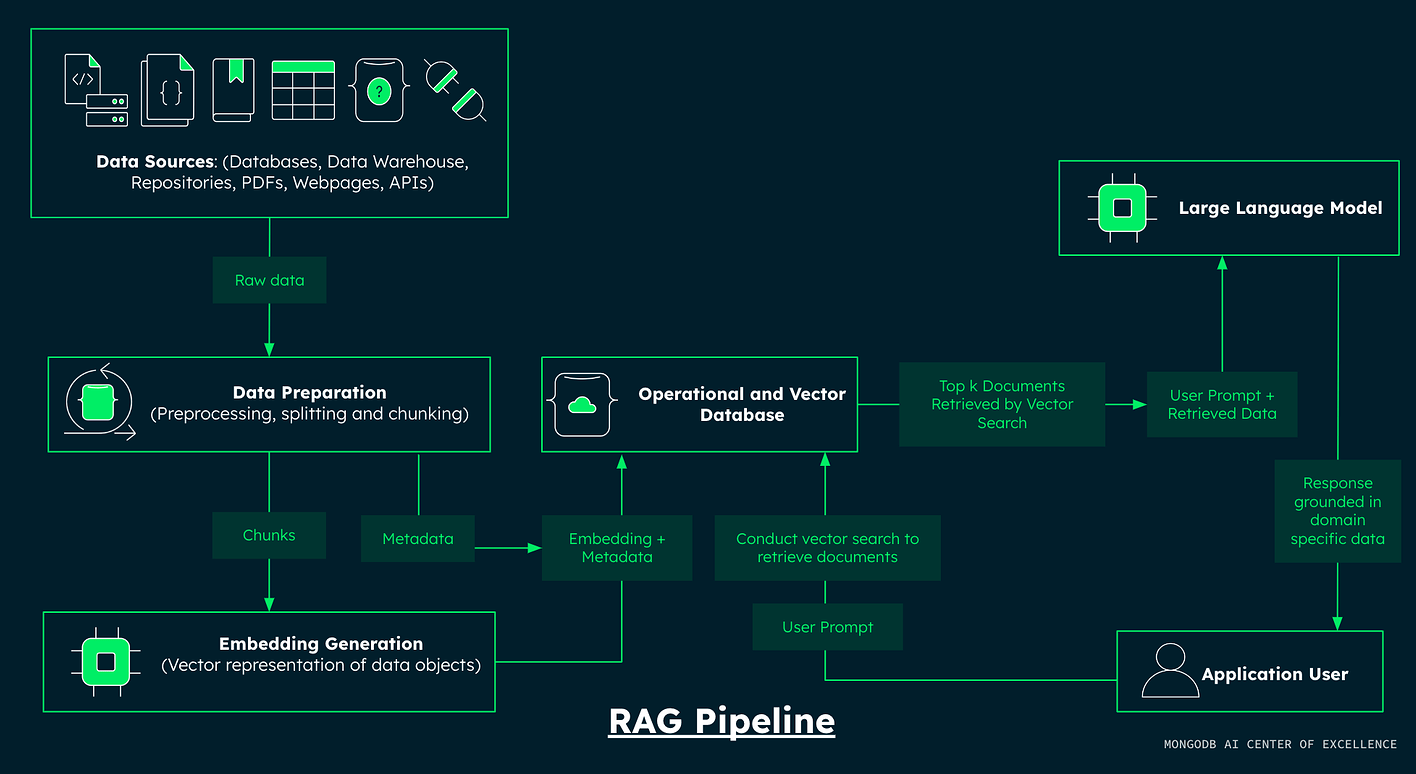
The Role of Context in AI
LLMs without context are guessing machines.
AI systems need:
- Historical data
- User interactions
- Domain knowledge
- Metadata filters
This is called contextual retrieval.
Without Context:
“Hallucinated answers”
With Context:
“Grounded, accurate responses”
👉 This is why RAG (Retrieval-Augmented Generation) is critical.
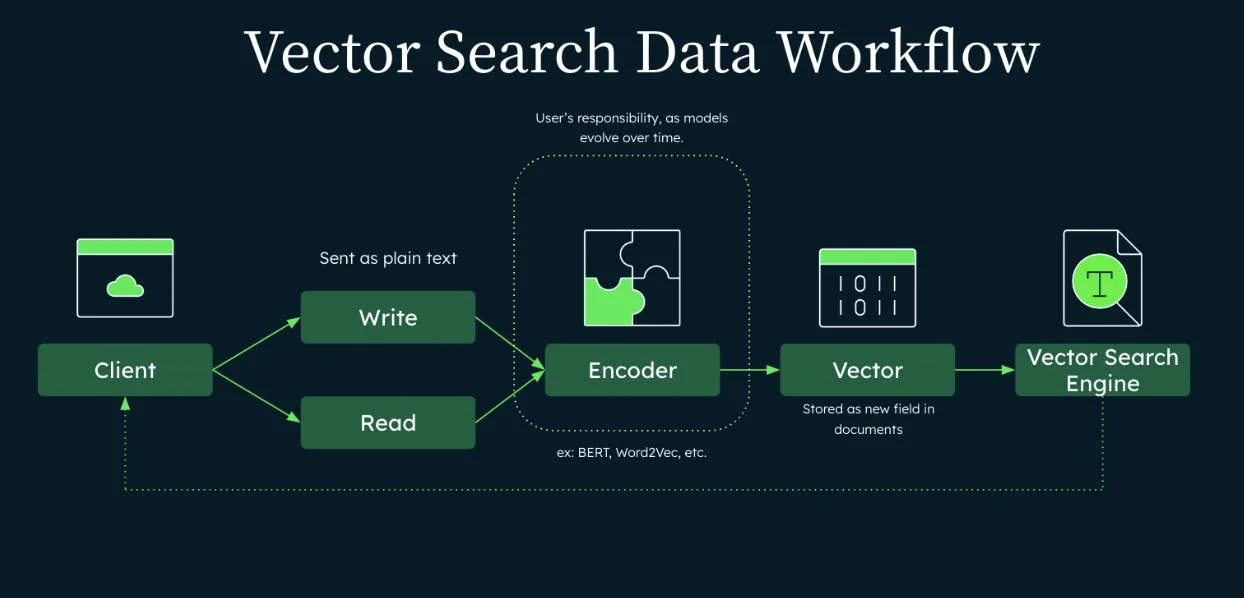
Vector Search — The Foundation
Vector search enables systems to:
- Understand meaning
- Find similarity
- Retrieve relevant data
Example:
Query: “customer complaints about service delay”
System retrieves:
- “late room service issues”
- “delayed check-in complaints”
Even without exact keywords.
What is Vector Cache? (Advanced but Powerful)
Vector cache is an optimization layer.
What it does:
- stores frequently used embeddings or results
- avoids recomputation
- reduces latency
Why it matters:
| Without Cache | With Cache |
|---|---|
| High latency | Faster response |
| Repeated embedding calls | Reused vectors |
| Higher cost | Cost optimized |
Critical for: Chatbots, AI agents, High-scale RAG systems
AI Memory Layers (Very Important Concept)
Modern AI systems have multiple memory layers:
| Memory Type | Description |
|---|---|
| Short-term | Current conversation |
| Long-term | Stored embeddings in DB |
| Episodic | User-specific history |
| Semantic | Knowledge base |
The database plays a key role in long-term + semantic memory.
Traditional Database vs AI Database
| Feature | Traditional DB | AI Database |
|---|---|---|
| Query Type | SQL / exact match | Semantic + hybrid |
| Data Type | Structured | Multi-modal |
| Search | Keyword | Vector + hybrid |
| Context Awareness | ❌ | ✅ |
| AI Integration | Limited | Native |
Modern AI Architecture
Typical flow:
User Query
↓
Embedding Model
↓
Vector Search
↓
Context Retrieval
↓
LLM
↓
Response
The database sits at the center of intelligence
How to Choose the Right AI Database
Before selecting, evaluate:
1. Data Capability
- Can it handle structured + unstructured + vector?
2. Query Flexibility
- Does it support hybrid queries?
3. Performance
- Latency under real-time load?
4. Scalability
- Can it handle growing embeddings?
5. Context Handling
- Can it retrieve relevant context efficiently?
6. Ecosystem
- Integration with LLMs, embeddings, pipelines?
7. Cost Efficiency
- Storage + compute + query optimization?
#AI #AIDatabase #VectorSearch #RAG #AIAgents #DataEngineering #GenerativeAI #AIArchitecture #MachineLearning #mongodbcommunitychampion #mongod





Subscribe to our mailing list to get the new updates!

Subscribe our newsletter to stay updated